Plan a day together
How to read a ski resort snow forecast
Read a ski resort snow forecast by its hours, elevation, snow level, low-end amount and wind, with a worked example and a rule for when to commit.
By SkiBuds · Updated
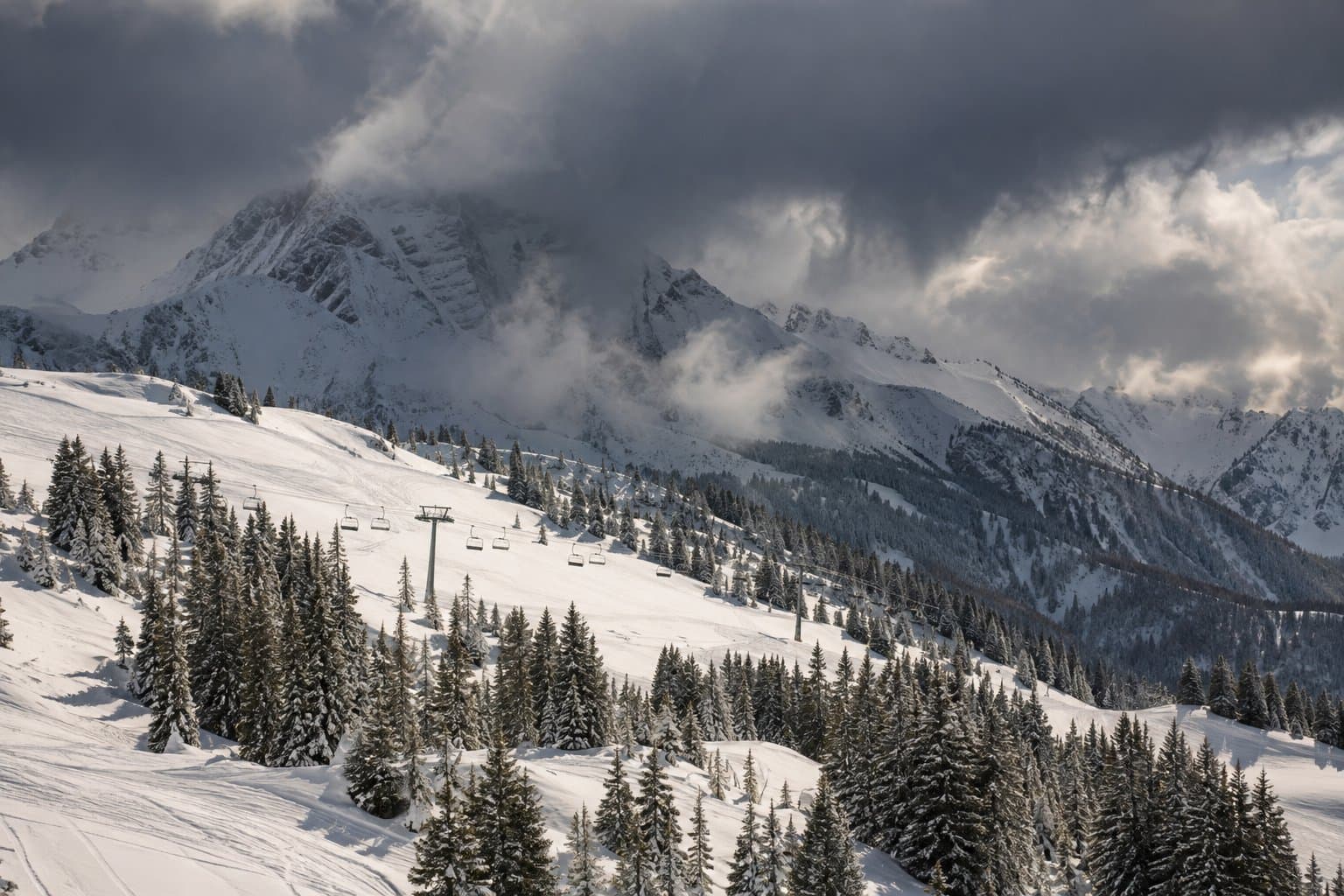
To read a ski resort snow forecast, check four things before the headline number: which hours the total covers, which elevation it describes, the snow level, and the wind up high. Then plan around the low-end amount. In the Avalanche Weather Guidance that National Weather Service offices write for avalanche centers, snow comes in 12-hour blocks ending at 6 a.m. and 6 p.m. local time, and the low end is an amount with a 9 in 10 chance of being beaten. If the day still works at that number, it's worth committing to.
The hours behind a total matter more than its size
A 24-hour total and a seven-day total answer different questions, and the same storm looks large or small depending on where the window starts. For first chair, the block that matters is the one that ends before the lifts open. Six inches in the 12 hours ending 6 a.m. Saturday is snow waiting for you. The same six inches in the block ending 6 p.m. Saturday is snow you ride through, and much of it lands while you're already on the hill.
Weekly totals hide this completely, because a seven-day number can include a storm that arrives the day after you drive home. The rebuilt SkiBuds app, coming soon, will count its seven-day view as seven resort-local calendar days starting today, rather than a rolling 168 hours from the moment you open it. The weather feature preview shows the planned views.
The snow level decides which part of the mountain gets snow
A forecast for town and a forecast for the summit describe different places, and in the mountains a few thousand feet can separate powder from rain. The NWS guide to its Avalanche Weather Guidance names the place before it gives a single number. Its sample forecasts open with Mt. Farwell and its elevation, 10,200 feet, or with "Thompson Pass Upper Elevations (above 4000 ft)", which tells you exactly which slopes the numbers describe.
The same guide defines the snow level, the most useful line on a mountain forecast: "the elevation above which snow will fall, and below which rain will fall." It adds that "a mix of rain and snow may be observed at elevations within a few hundred feet of the snow level." So compare the snow level with your resort's base and summit, and leave a few hundred feet of margin. If it stays well below the base, the whole mountain gets snow. If it climbs into the lift-served terrain, the lower runs turn heavy or wet while the top stays good.
The app will include base, mid-mountain and summit views. Some providers don't supply a separate forecast for each elevation, and a summit view is a forecast for that height, not a reading from an instrument up there.
The low-end amount is the number to plan around
The NWS guide spells out its range. The low end is "a reasonable lower-end snowfall amount," with a 90% chance that more snow falls and a 10% chance that less does; the guide calls it "an unlikely scenario." The high end mirrors it, with only a 1 in 10 chance of more. Both are drawn from "many computer model simulations of possible snowfall totals." A forecast of 6 inches with a low end of 5 and a high end of 8 is a confident forecast. A forecast of 6 inches with a range of 1 to 14 is a coin flip with a number printed on it.
Plenty of forecasts print only one number. When yours does, the NWS probabilistic snowfall forecasts give a most likely, minimum and maximum amount for winter storms, or you can build a range from several sources the way why snow forecasts disagree shows. The SkiBuds app will rate forecast confidence too, from lead time and how closely its sources agree. That rating will describe agreement, not the chance that a particular amount will fall.
A gust number means the summit air will be rough
Read the wind for the elevation you plan to ride. In the NWS guidance a gust value appears only when forecast gusts beat the sustained wind by at least 15 mph, so seeing a gust number at all tells you the air will be uneven. Strong summit wind strips new snow off exposed ridges, packs it into gullies and can slow or stop the upper lifts. Whether a lift runs is the resort's call, made that morning. Use the wind forecast to decide what to look for in the lift report, and let the report decide.
One Stevens Pass forecast, read line by line
Here is a hypothetical forecast for Stevens Pass, whose main base sits at 4,061 feet and whose summit reaches 5,845, laid out the way the NWS guidance presents a point forecast. Say it's Thursday evening and it reads:
Stevens Pass summit (5,845 ft) 12-hour snow ending 6 a.m. Saturday: 7 inches (low end 3, high end 11) 12-hour snow ending 6 p.m. Saturday: 1 inch Snow level: 3,000 feet overnight, 3,500 feet at 9 a.m., 4,500 feet by noon Saturday Wind: southwest 20 mph, gusts to 40
Start with timing. The 7 inches falls overnight, so it's on the ground before first chair, and the inch in the next block means a little more falls at some point during the day. Next, the range: 3 to 11. Ask whether the day is worth the drive at 3 inches. If it is, keep reading. If it only makes sense at 7 or more, wait for Friday's update before anyone books anything.
The snow level is the twist. Overnight it sits about 1,000 feet below the base, and at 9 a.m. still about 560 feet below, so the whole mountain gets snow through the morning. By noon it's about 450 feet above the base, and the mix can reach a few hundred feet higher. If any of that inch is still falling then, the runs into the base get rain or wet snow by lunch, along roughly the lower third of the mountain's 1,800 feet of vertical. The top stays wintry.
Then the wind. Gusts to 40 mph at the summit point are worth a look at the morning lift report before you pick a meeting spot at the top, so name a second spot lower down in case the upper lifts are slow to open.
Notice which line changed the plan least: the headline number, 7 inches.
Planning on the low end costs you some good days
The rule has a price, and the NWS definition names it. If the low end is beaten 9 times in 10, a plan built on it will usually undersell the day, and a group that commits only when the low end works will sometimes stay home on a Saturday that turned out deep. That's a real loss. It's still the right trade when committing means a 5 a.m. alarm, a two-hour drive and a carpool of people who took the day off. The low end protects the people who said yes.
There's a second limit. The 9 in 10 is counted across computer simulations, so it can only be as wide as they are. When every simulation misses the same thing, a storm track or a layer of warm air, the real total can land below the low end more often than once in ten. And no snow forecast tells you which lifts will run, whether a slope is safe to ride or whether the pass is open. The resort's lift report, the avalanche forecast and the state DOT answer those, so keep official road and weather resources beside the group plan.
Decide on Friday evening, with one two-part test
Forecasts get more reliable as the day gets closer, so the update that matters most is the last one before you commit. Check when a forecast was issued, and whether an app is showing saved data. For a weekend trip, pencil the day in on Wednesday and decide on Friday evening, once Saturday is the next day in every forecast. Before you meet a new riding buddy or confirm a ski carpool, agree on when you'll all check again. Once snow is falling, measured snow beats any forecast, and snow depth vs snowfall vs SWE explains how to read the reports.
Commit when the plan still works at the low-end amount and the snow level stays at least a few hundred feet below the lowest terrain you want to ride. If either half fails, pick the backup before you leave the driveway.
Run that test on the hypothetical Stevens Pass Saturday. If 3 inches is enough to make the drive worth it, the low-end half passes. The snow-level half passes everywhere until mid-morning and only up high after that. So the commitment is narrower than "Saturday." It's first chair, the whole mountain until the snow level climbs, the upper lifts after that, and the car before lunch, when the bottom third turns heavy and wet.