No friends on a powder day? Powder day etiquette that keeps your crew

Stephen Phillips
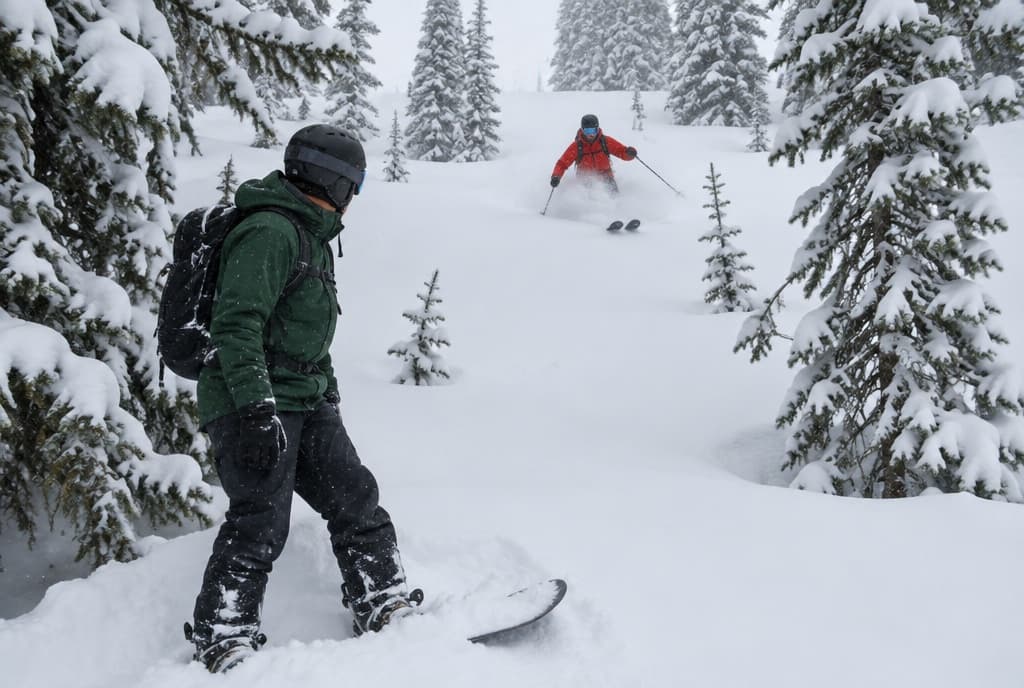
"No friends on a powder day."
Every skier and snowboarder has heard it, usually from someone already clicking into their bindings while you are still looking for your other glove. It is half a joke and half a rule. And for someone who built an app around finding people to ride with, you might expect me to hate it.
I don't. I think it is half right.
Powder days are the reason a lot of us ride. Some of the best days I have had were deep ones, like the pow days I got with my friend Michael at Mt. Baker in the 2020/21 season. Powder was even behind one of the features I built into the original app: lift-status notifications, because on a powder day you want to know the moment your lift opens without staring at your phone. Deep days matter. That is exactly why it is worth having a plan for how you ride them together.
What "no friends on a powder day" actually means
The saying is not really "ditch your friends." It means three things:
- Nobody waits around for someone who is not ready. If you said first chair, be at first chair.
- Nobody has to sit at the top of every run while the fresh snow gets tracked out.
- Everyone is responsible for their own day. You came for the snow, so did they.
All of that is fair. Where it goes wrong is when it turns into riders splitting up in the trees with no plan, on the one kind of day when being alone is most dangerous.
Agree on the plan the night before
The powder crews that work best do not argue at the bottom of the lift. They decide everything the night before:
- Meeting time and place. A specific lift and a specific time. "Around 8" is how you lose an hour.
- The waiting rule. For example: "We wait five minutes at the bottom of the lift, then go." Everyone knows it, so nobody is offended when it happens.
- Who rides with whom. If the group has different speeds, split into pairs of similar riders on purpose, instead of by accident. Skiing with friends of different abilities covers how.
- A regroup point. A lodge or lift where everyone meets at a set time, say lunch.
- Who is driving. Parking fills early on deep days. One car, leaving early, beats four cars arriving late. See how to plan a ski carpool.
To decide whether it is actually going to be deep, start with planning a powder day with friends and how to read a ski resort snow forecast. Big totals are not all the same, either: snow-to-liquid ratio explains why one foot of snow can ride completely differently from another, and why snow forecasts disagree helps you judge a forecast before you set an alarm for it.
Powder day lift line etiquette
- No cutting, no saving spots. Everyone woke up early. Your friend arriving late can join the line at the back.
- Use the singles line. If your group is split anyway, singles fill chairs and move faster. You will meet people too; see chairlift etiquette.
- Be patient with the rope drop. Patrol opens terrain when it is safe, not when the line gets loud. Never duck a rope or enter closed terrain. Closures on a deep day are often about avalanche control.
- Be kind to lift operators. Many of them were out before you were, getting the lift ready.
The one rule that is not a joke: stay in sight in the trees
Deep snow changes the risk in the trees. Snow around tree trunks can be loose and deep, and a rider who falls in head first can be trapped. When it happens, the person most likely to help is whoever you are riding with, and only if they can see you.
- Ride the trees with a partner, and keep each other in sight or within shouting distance.
- Stop where your partner can see you, and wait for them before dropping into the next section.
- Keep your phone on you and know how to reach ski patrol.
- Know where the boundary is. Inbounds, patrol manages avalanche hazard on open terrain. Outside it, you are in the terrain an avalanche forecast describes, which takes training, rescue gear and a partner. Start with how to read an avalanche forecast.
This is where "no friends on a powder day" gets it backwards. A powder day is the day you most want a friend nearby.
Sharing the snow
- Don't drop in on someone. If another rider is already heading into a line, let them go first.
- Don't stop below a blind roll. On deep days people ride faster and see less. Stop where you are visible from above.
- Look uphill before you merge. The Responsibility Code applies on deep days as much as any other.
- Share the info, not just the snow. Telling a stranger on the chair where the good snow is costs you nothing, and it is how a lot of riding friendships start.
After the first few runs
The first hour is for the snow. After that, regroup. The best part of a powder day is usually lunch, comparing the run that nearly ended you with the one you will be talking about all season. That is the bit you cannot do alone.
So here is my version of the saying: no waiting on a powder day, but no riding the trees alone either.
Where SkiBuds fits
The rebuilt SkiBuds app puts mountain weather and snow forecasts, rider discovery, messaging and maps in one place, so finding people who are ready to go when it is deep, and agreeing on the plan, can happen before the alarm goes off. It is coming soon for iOS and Android. Until then, every mountain in the resort guide has its own forecast page.
So which side are you on? Is it really no friends on a powder day, or do you ride it with your crew? Tell us on Instagram.