Chairlift etiquette, and how to actually talk to people on the lift

Stephen Phillips
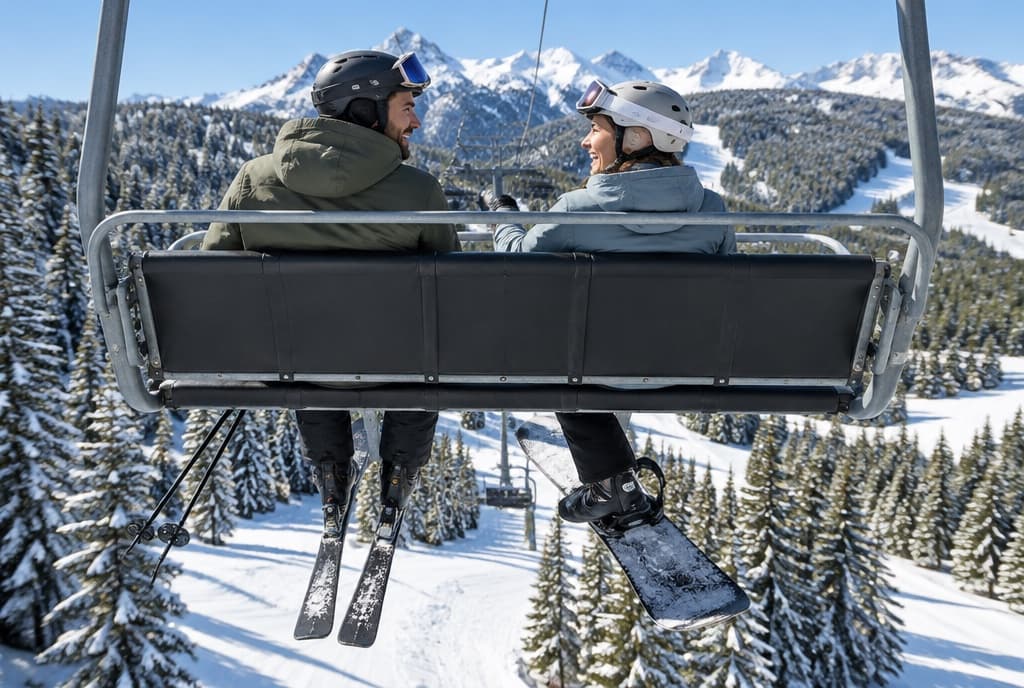
SkiBuds started on chairlifts.
During the 2018/19 season at Whistler I rode almost every day, and a lot of the ideas for the app came from the people I sat next to. The same problem kept coming up: finding someone to ride with, and someone to share the drive. That felt like a problem worth solving.
The chairlift is the one place at a ski resort where strangers sit side by side with nothing to do for a few minutes. Get the etiquette right and it is the easiest place on the mountain to make a friend. Get it wrong and it is a long, awkward ride.
Lift line etiquette
- Merge like a zipper. Where lanes come together, take turns. Cutting the merge is the fastest way to make the whole line quietly hate you.
- Fill the chair. On a busy day, an empty seat is everyone's wait time. If you are in a group of two at a four-seat chair, call out for singles.
- Use the singles line if you are alone. It is faster for you and it fills seats for everyone else. It is also where most of the conversations I describe below start.
- Watch your gear. Skis and snowboards stick out further than you think. Keep your tails and nose off other people's equipment.
- Don't save spots. Your friend at the back of the line can meet you at the top.
Loading the lift
- Be ready before your turn. Poles in one hand, goggles on, backpack off your back if it will catch on the chair.
- Snowboarders: one foot free, and ride up to the line with a quick look at the person next to you so nobody gets tangled.
- Look back for the chair. A quick glance over your shoulder saves a lot of bruised calves.
- If you are new, say so. Lift operators can slow a chair down. Telling the person next to you that it is your first time is not embarrassing. Everyone has been there.
The safety bar
Lower it. Many resorts ask every rider to use the restraint bar, and there is no good reason not to.
The etiquette is simple: say something before you lower it. "Bar coming down" is enough. Nobody likes a bar landing on their helmet, and a quick heads up gives everyone time to move their poles and hands. Raise it the same way, with a word, as you get near the top.
Unloading
- Agree on a direction. Before you reach the ramp, say which way you are heading. "I'm going left" prevents most unloading crashes.
- Clear the ramp. Move away from the unload area before you stop, buckle in or check your phone. The next chair is right behind you.
- If you fall, move. Get up and out of the way as fast as you can, and let the operator stop the lift if needed.
Riding up: the unwritten rules
- Speakers are for the parking lot. Music on a chairlift is everyone's music. Headphones are fine.
- Keep it smoke free. You are sitting shoulder to shoulder with strangers, sometimes with kids.
- Don't drop anything. Hold your phone tightly or leave it in a zipped pocket. A dropped pole or glove can usually wait for a ski patroller or a later lap, so never jump after it.
- Be good with kids on the chair. If a young rider is next to you, help with the bar and keep things calm. Parents notice.
How to actually talk to people on the lift
This is the part nobody writes down. The chair ride is a few minutes, which is exactly the right length for an easy conversation with no pressure to keep it going.
Read the room first
Headphones in, face buried in a phone, or a couple deep in their own conversation? Let them be. A nod and a "good morning" is plenty. Everyone else is usually happy to talk.
Openers that work
- "Where have you been finding the good snow today?"
- "What's your favorite run off this lift?"
- "Are you local, or visiting?"
- "Have you ridden here when it's deep? What's it like?"
Notice that none of them is about you. Locals love being asked about their mountain, and visitors love comparing notes. Snow, runs and the day ahead are safe, easy topics that everyone on the chair shares.
Turning a chair ride into a lap
If the conversation is good and you are heading the same way, the next step is simple: "Want to take a lap?" Say it near the top, so there is an easy exit if they are meeting friends. One run is low stakes. If the pace works, take another. If it does not, wave and go your own way.
If you get along, swap numbers before the day ends. That is how a chairlift conversation turns into a riding partner, and it works the same for anyone you meet on the mountain. Shae, who I met in Park City in December 2020, became one of my good riding buddies because we kept in touch and rode together again that season. The first day is the meeting. The text afterward is what makes it a friendship.
When riding styles do not match
Different abilities do not have to end the day. Agree to meet at the bottom of a lift, or pick runs with an easier and a harder way down. Skiing with friends of different abilities has a full plan for it.
Why this matters
Chairlift conversations shaped SkiBuds from the start. They are also why I built it: so the conversation can start before you get to the lift, with people who ride the mountain and the terrain you do. The rebuilt app is coming soon for iOS and Android. Until then, start with how to find ski buddies, read about skiing alone and meeting people, and check the safety page before you meet someone new.
What is your best chairlift opener, or the strangest conversation you have had on a lift? Tell us on Instagram.