Skiing alone: company on the way up, nobody on the way down

Updated
Skiing alone isn't weird. You choose your runs and stop when your legs are done, with no waiting at the top and no lunch at 10:30 because someone is hungry. It's also the day you're most likely to meet someone. When you ride with friends you talk to your friends. When you ride alone the lift keeps seating you next to strangers. It puts you beside someone on the way up, and on the way down nobody is beside you. So here's the rule I'd ride by. Alone, choose open, marked terrain that suits your ability and make a check-in plan. Save deep snow and remote terrain for a prepared partner, and use the way up to find someone to share a lap. The method fits on a lift ticket: take the singles line, ask the person beside you one question about the mountain, and if the ride up goes well, ask near the top whether they want to take a lap.
The way down: what you can ride with nobody watching
The strongest case against skiing alone is the way down. If you fall somewhere quiet, nobody sees it. An injury can leave you unable to get help on your own. In deep snow a fall can mean what the NSAA calls snow immersion: a rider falls into deep, loose snow, can't get out and suffocates. I take that seriously; by 2021 I was describing SkiBuds as a way to find people to ride with "from a safety perspective." Consider how quickly you might need help and whether anyone could see you fall.
Deep snow is the clearest case. Deep Snow Safety, a site about tree well and snow immersion accidents, puts it in one sentence: in many of them, part of the rider's body or equipment was visible, but a partner wasn't there to see it. Nobody was watching, and a check-in text that fires two hours later can't change that. It's why the NSAA's rule for deep snow is a partner within viewing distance, and why I'd treat trees on a deep day as partner terrain, every time. Open, marked runs may be easier for others to reach, but neither passing riders nor patrol can be counted on to see every fall. A check-in plan helps someone raise the alarm; it is not a substitute for a partner who can respond immediately.
Before each run, consider how visible and accessible it is, how busy it is, and whether conditions are changing. Choose open, marked runs within your ability and give yourself room to stop. A groomer that's busy at 11 can be empty by last chair. Save trees and deep snow for a partner who stays in sight and knows how to respond. Beyond the resort boundary, a partner and rescue gear alone do not make avalanche terrain safe: education, practice, a current forecast and conservative decisions matter too. How to read an avalanche forecast is a place to begin.
Before the first chair, save the resort patrol number and tell someone off the mountain where you plan to ride, when you expect to finish and what to do if you miss the check-in. Agree on the plan with them first:
Riding [mountain] alone today, mostly off [lift]. Done by [time]. If you haven't heard from me an hour after that, call me, then call patrol at [number].
Check the trail map and resort conditions before setting out. Note the names of your lift and planned runs so you can describe your location if you need help. If you change areas or stay later, update your contact; when you finish, send the promised check-in. If you need patrol, call the resort number and give the run name, a nearby landmark or lift tower number, and the nature of the problem.
If you'd rather your phone did the reminding, iPhone's Check In (iOS 17 or later on both phones) and Safety Check in Google's Safety app (on some Android phones) both alert your contacts if you don't respond by the time you set. Keep the phone in an inside pocket, because Apple says cold can temporarily shorten battery life.
Consider what to leave off your solo day: the trees on a deep day, terrain past the gates and the empty run at last chair. The powder day post covers riding trees with a partner. A new acquaintance on the lift can be good company for a groomed lap, but do not assume they have the skills, equipment or shared plan needed for a deep-snow rescue.
The way up: make the first invitation one lap
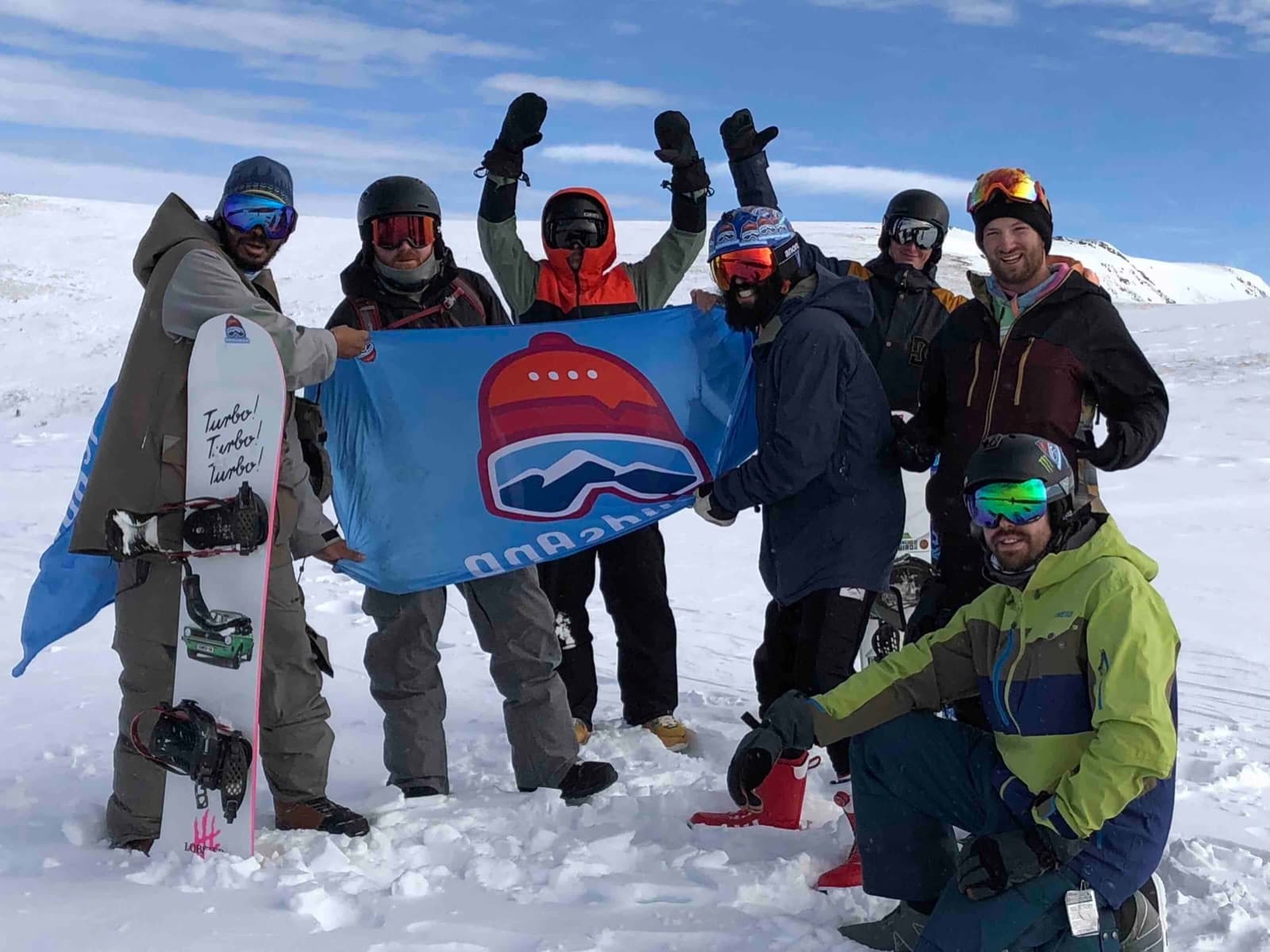
Here I should be straight about my evidence. A lot of SkiBuds came from ideas people gave me on chairlifts in 2018/19, the season I spent riding every day in Whistler. But the more than 100 riders I'd met by March 2021 came through the app (the photo at the top is two of those groups, at Keystone in 2019), and in the post I wrote that month, I said I didn't pass out stickers or approach random people anymore. So treat this half as a bet: the chair can start it, and a plan with a mountain in it keeps it going.
Use the singles line when there is one. It exists to fill the seats groups leave empty, so you'll usually ride up next to someone new. Wait until everyone is loaded and settled, then ask one question about the mountain, like "Where's the snow been best today?" or "What's your favorite run off this lift?" If you get a short answer and they turn back to their phone, let it go. If the conversation is good and you're heading the same way, ask near the top: "Want to take a lap?" You're asking someone you met on the way up to share one way down, and the worst answer is no. Chairlift etiquette: how to share a seat nobody can leave has more openers and the loading details.
If small talk on every chair wears you out, make the invitation before you get there. In 2021 I wrote that I couldn't even describe the amount of time I'd spent talking to random people across different groups and posts, and that season I got to meet up with several of them. "Anyone want to ride?" gives nobody anything to say yes to. Name the mountain, the day, the terrain and your pace:
Riding [mountain] on [day]. Comfortable on groomed blues, steady pace. Meeting at [busy base-area spot] at [time]. Anyone up for one lap?
Meet somewhere busy, ride one run and decide from there; everyone has had a lap that didn't click. The free meetup planner builds the message for you, and the safety page has more on meeting someone new. A group lesson or a ski club skips the approach altogether: by lunch you've watched each other ride, which is most of what a first lap tells you.
After the lap: make a plan with a mountain in it
One good lap is still one run. It doesn't get you a partner for the trees next storm, and the chair can't do the rest. This is the second half of the bet, and my 2021 post backs it better than the first: of the more than 100 people I'd met through the app, I wrote, there were "many people that I continue to keep in contact with and still ride to this day."
Two stories from that post show how it starts. In March 2020 I was at Whistler with one of my best friends, Justin, when we met a rider named Aodhgan through SkiBuds. After two days riding together he mentioned he was heading out to Kicking Horse, I took him up on it right away, and we rode its last day before it closed. Shae had become one of my good riding buddies by March 2021; we'd met up a couple of times that season and had Snowbasin planned for that week. In both there was a next plan with a mountain in it, and my read is that the plan is what kept us riding.
If that next plan grows into several days away, the guide to finding people for a ski trip covers trying a day together before booking, splitting lodging and agreeing on cancellations.
So if a lap went well, ask whether they'd like to swap numbers, and make the follow-up a real plan. "We should ride sometime" is a polite way to never ride again. This works better:
Good laps today. I'm riding [mountain] on [day], probably starting around [time]. Want to meet at [spot]?
The first day is the meeting. The text afterward makes another day possible, and in that same post I wrote that I'd have given up on SkiBuds many times if it weren't for meeting people through it.
If you're heading out alone this weekend, choose one run before the first chair: an open, marked run within your ability, good enough to name if the person next to you asks what's good. Put it in your check-in text. If nobody asks, it's still a good run.