Plan a day together
How to find snowboard friends: where riders meet
Where to find people to snowboard with: park sessions, lessons, mountain groups, clubs and r/SkiBuddies, plus riding alone and with skiers.
By SkiBuds · Published · Updated · Sources & corrections
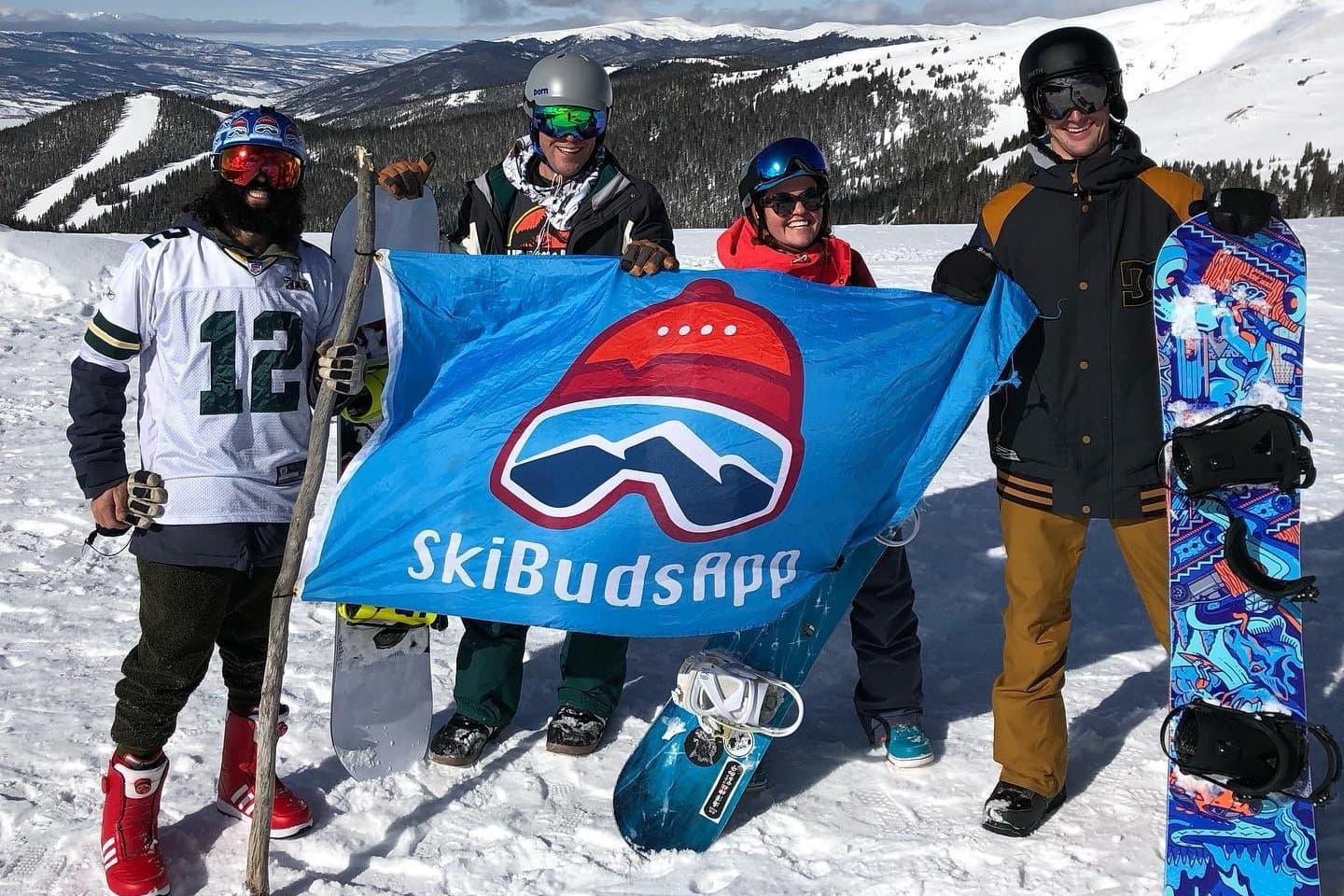
To find snowboard friends, go where the same riders turn up week after week: a regular park session on the same morning, a group lesson at your level, your home mountain's online group, a club that welcomes snowboarders, r/SkiBuddies and Meetup's snowboarding groups. Then describe your riding in terms another snowboarder can picture, such as "linked turns on blues and a few laps on small boxes," and offer a time and a public place to meet. Before a day with skiers, find the flats on the trail map, because cat tracks and long traverses are where mixed crews come apart.
Where to find snowboard friends
Start with the mountain you ride most, because the people worth finding ride your terrain on your days, often enough to recognize.
- The terrain park. The park does in person what a group does online. The same riders tend to lap the same features on the same mornings, so show up to the small park every Saturday and you'll start recognizing faces, and they'll start recognizing yours. "How are you setting up for that box?" is an easy question on the chair back up. On January 20, 2020 the SkiBuds account posted about the original app from Copper: "Met up with another shredder on the app today and hit peace park all day." Peace Park laps at Copper and Breckenridge tells the rest of that winter.
- A group lesson. If you're learning to carve or taking your first park laps, a lesson puts you beside people at your level working on the same thing, and the chair after class is a natural place to ask who's riding next weekend.
- Your mountain's group. Search the mountain's name with "snowboard" or "ski and ride," and look for a group that has posted this month.
- A club that welcomes snowboarders. Club names won't settle much. The National Ski Council Federation's Bay Area Snow Sports Council listing names 19 member clubs, and two of them, Inskiers Ski and Snowboard Club and Snowchasers Ski & Snowboard Club, put snowboarding in the name. The other 17 names tell you nothing either way, so ask the organizer (how to join a ski club covers what else to ask).
- Reddit and Meetup. r/SkiBuddies is for "Skiers and Snowboarders," in its own welcome post's words, and posts carry a region tag such as [CA], so you can search for your area. Meetup's snowboarding topic page lists groups by location; pick one with events on the calendar.
Splitboarders heading past the boundary need a different search, and how to find a backcountry ski partner starts with avalanche training. Francesca Jacquez's first year splitboarding in Bend, Oregon shows what good partners look like there: "They're patient with me, teach me what they know and encourage me to push my limits (in a safe and fun way)!"
SkiBuds is being rebuilt for iOS and Android so you can browse riders by skill level, availability and interests such as park, powder and trees, then send a friend request and plan the day in chat; the snowboard buddy app page explains the plan. The new app is coming soon (launch status), so for now the park, a lesson and a group are the routes that work.
Describe your riding so another snowboarder can picture it
Sooner or later someone on the chair back up, or under a group post, asks how you ride, and "intermediate" is the easy answer. It covers someone who linked their first turns last month and someone carving every blue on the map. Describe what you ride comfortably today, not what you hope to ride by March. A few phrases that say more than a level:
- Groomers: "linked turns on blues, starting to carve," or "comfortable on most blacks."
- Park: "small boxes and jumps," or "working on 50-50s on the medium rails." Add whether you want company, a spotter or someone to film.
- Trees and powder: "glades on blues, slow in tight trees."
- Switch: "can ride switch on greens."
- Learning: "first season, need easy runs and time to strap in."
If what you want is instruction, book a lesson and ride with people afterward.
Put the description in a session post
Those phrases are most of a post. Add a time, a public place and an easy way to reply:
Snowboarding [resort] on [date], roughly 10 to 2. Linked turns on blues, and I'd like a few laps in the small park on boxes. I'll be at [public base-area landmark] at 9:45. Skiers welcome if you don't mind regrouping above the flats. Anyone riding a similar day?
Keep transport separate: "I'll meet you at the mountain," or a second post for a carpool. The meetup checklist covers the rest of a first day, including an easy way for either person to call it early.
Snowboarding alone
No partner this weekend is no reason to stay home. A solo day on groomers is easy to plan: ride the lifts you know, take a break when you want one, and tell someone at home which mountain you're at and when you expect to be done. The singles line and the chair are where solo days turn into company, and skiing alone has the founder's own habits for riding solo and meeting people on the way.
Two kinds of day are better with someone. In trees and deep snow, Deep Snow Safety tells riders to "ride or ski with a partner and keep your partner in sight at all times." If you're solo, choose suitable open terrain within the resort boundary and avoid tree wells and untracked deep snow. A groomed run can still have hazards, so check conditions and closures. In the park, a spotter or someone filming can help. Ask at the top of the feature you're both lapping. Erin Hogan's Hatcher Pass Canyon Gap story is a firsthand account of a high-risk road gap, not a guide.
The only snowboarder in a ski crew
Plenty of snowboarders end up as the one board in a group of skiers: a partner's friends, a work trip, a ski club. Most of the mountain works fine. Skiers and snowboarders share almost any run; they come apart on cat tracks, long traverses and runouts. A skier poles along a cat track while a snowboarder slows, unstraps and walks. A crew that hasn't talked about it ends up with the snowboarder hiking while the skiers wait somewhere awkward. A crew that has can route around most of it.
The conversation is four rules:
- Approach the flat in control. A snowboarder may need momentum, but never more speed than conditions allow. Be ready to stop or avoid others, and slow down where visibility is limited.
- Give each other room. Agree on the route and order before setting off, but do not pass unsafely to keep that order. People ahead and downhill have the right-of-way.
- Choose a safe regroup. Meet above the flat or at the next lift, where you are visible from above and out of traffic. Avoid stopping in the middle of a narrow traverse.
- Clear the lift unloading area. The snowboarder can strap in off to the side while the skiers wait in a safe, visible place nearby.
Look at the trail map together and ask resort staff about long traverses on your planned route. If a flat is crowded or unfamiliar, it is fine to slow down or unstrap and walk. The NSAA Responsibility Code explains the shared rules for staying in control and avoiding others. Skiing with friends of different abilities covers the rest of a mixed day.
Some North American mountains don't allow snowboards
Nearly every resort welcomes snowboarders, which is why the exceptions catch people out. Alta's mountain policy says "Snowboarding is not allowed" and lists splitboards among prohibited equipment, and Alta's own site calls it "one of three ski areas in North America that does not permit snowboards on its lifts." Deer Valley calls itself "a ski-only resort," and Mad River Glen's equipment policy explains a ban that began with the 1991-92 season, after trouble at a lift with a flat unloading area, and that more than 75% of co-op shareholders voted to keep in 1995. Deer Valley's address is Park City, so a club week "in Park City" can include a ski-only day without anyone thinking to mention it. Ask for the list of mountains before you pay a deposit, and read the resort guides for Alta and Deer Valley if either is on it.